
TNF identified as a key therapeutic node in autoimmune hepatitis
Xu Y et al, J Hepatol. 2026 [ahead of print]
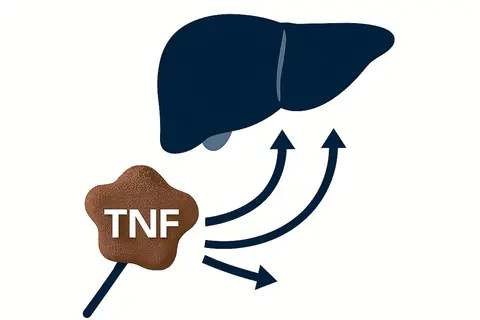
This translational study combined integrative omics approaches with a phase IIa clinical trial in patients with autoimmune hepatitis (AIH) to identify disease-driving pathways. The analyses highlighted TNF as a central inflammatory signaling node, and TNF inhibition demonstrated immunological as well as preliminary clinical efficacy. These findings provide an important rationale for future targeted treatment strategies in AIH beyond conventional immunosuppression.
Background and aims: Patients with autoimmune hepatitis (AIH) experience increased mortality and severe side effects from non-specific immunosuppressive therapy, highlighting an urgent need for targeted treatment approaches. Here, we aimed to delineate the cellular and molecular network underlying AIH within its spatial context and to validate a key therapeutic target in a clinical trial.
Methods: We employed computational modelling, multi-omics analyses, and functional experiments to map the immune landscape of AIH. In addition, we conducted a steroid-free open-label phase IIa clinical trial using infliximab, a TNF-targeting antibody, in patients with AIH.
Results: Our studies revealed that myeloid cell and hepatocyte-derived IL-15 promotes cytotoxicity and proliferation of liver auto-aggressive CD8+ T cells. Full execution of their cytotoxic program is licensed by TNF derived from clonally expanded liver-resident CD4+ T cells. AIH hepatocytes respond to TNF by increasing expression of adhesion molecules, making them targets for both CD8+ and CD4+ T cells. In the clinical trial, targeting TNF with infliximab demonstrated efficacy as an entirely steroid-free AIH treatment.
Conclusions: These findings elucidate the immune network in AIH and identify TNF as one of the central network nodes. Accordingly, our findings provide the basis for novel targeted, steroid-free immune therapies, including the use of infliximab.