
Safety and effectiveness of cholecystectomy and ERCP in biliary pancreatitis during pregnancy
Tarján D et al, United European Gastroenterol J. 2025;13(9):1803-1811
This multinational retrospective cohort study suggests that cholecystectomy is safe and effective in pregnant patients with biliary pancreatitis during the second and third trimester, while ERCP is safe in any trimester.
Background: Biliary acute pancreatitis (AP) during pregnancy is a challenging situation, and current guidelines for AP, pregnancy care, and surgery do not specifically address its management. This study investigated the safety and effectiveness of cholecystectomy and endoscopic retrograde cholangiopancreatography (ERCP) during pregnancy in AP.
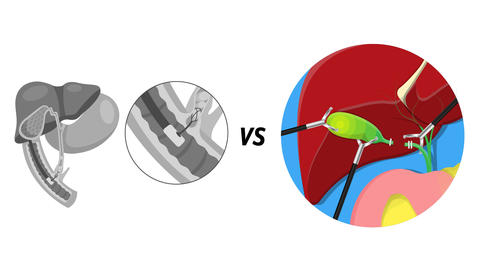
Methods: This international retrospective multicenter cohort study encompassed questions related to demographic information, clinical presentation, management strategies, timing of cholecystectomy, approaches to the procedure, complications, and outcomes. Continuous variables were summarized as medians with interquartile ranges, and categorical variables as frequencies and percentages. Group comparisons used Welch's t-test, Pearson's chi-squared, or Fisher's exact tests.
Results: A total of 101 cases from 14 countries and 19 centers were enrolled. Cholecystectomy after mild AP during pregnancy had a lower rate of readmission due to recurrent AP or other gallstone-related complications compared with those who did not undergo surgery after a mild AP during pregnancy (0% vs. 24%; n = 0/17 vs. n = 12/49, p = 0.027). Cholecystectomy performed during pregnancy was associated with a low surgical complication rate, identical to that seen in postpartum procedures (12% vs. 10%; n = 2/17 vs. n = 3/30; p > 0.999). Preterm birth occurred in 7.1% (n = 1/14) of patients with cholecystectomy versus 11% (n = 5/45) without. Fetal loss after surgery occurred only in the first trimester (n = 3/17 vs. n = 1/49). No difference was seen in readmission (5%, n = 1/21 vs. 27%, n = 4/15; p = 0.138), fetal loss (5%, n = 1/21 vs. 27%, n = 4/15; p = 0.138) and preterm birth (6%, n = 1/17 vs. 8%, n = 1/12; p > 0.999) between the surgical and ERCP groups. The fetal loss (9.1%, n = 2/22 vs. 5.4%, n = 4/74; p = 0.618) and preterm birth rates (5.9%, n = 1/17 vs. 12%, n = 8/65; p = 0.677) did not significantly differ between patients with and without ERCP during pregnancy.
Conclusion: Cholecystectomy is effective and safe in pregnant patients during the second or third trimester in cases of mild biliary pancreatitis. ERCP is safe in any trimester.