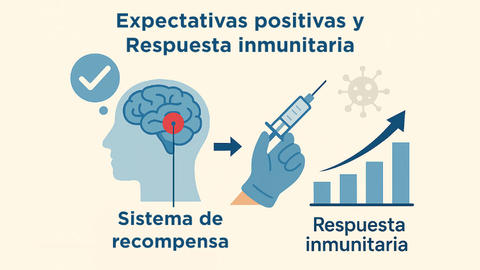
Positive expectations and immune responses – linking the brain’s reward system to immunity
Lubianiker N et al, Nat Med. 2026;32(2):572-581
This randomized controlled trial shows that upregulation of the brain’s mesolimbic reward system using neurofeedback is associated with a stronger antibody response to hepatitis B vaccination. In particular, increased activity in the ventral tegmental area correlated with higher post-vaccination antibody levels. These findings suggest that positive expectations and reward-related brain activity may influence immune responses.
Growing evidence points to a close neurophysiological link between brain and body. Recent rodent studies have shown that the dopaminergic mesolimbic pathway, which underlies expectations of positive outcomes, also modulates immune function. However, it remains unknown whether a similar brain-immune link exists in humans and whether it involves conscious positive expectations. In a preregistered, double-blind randomized controlled trial, we used fMRI neurofeedback (NF) to train healthy participants to increase reward mesolimbic activity through self-chosen mental strategies, followed by an immune challenge with the hepatitis B virus (HBV) vaccine and assessments of HBV antibody (HBVab) levels. Eighty-five participants were randomized to (1) reward mesolimbic upregulation (n = 34), (2) non-mesolimbic control upregulation (n = 34) or (3) no-NF control (n = 17). Prespecified primary outcomes were (1) differences in reward mesolimbic activation between NF groups, (2) correlation between reward mesolimbic upregulation and post-vaccination HBVab changes across both NF groups and (3) group differences in post-vaccination HBVab changes. Both NF groups showed significant increases in reward mesolimbic activation. Notably, greater ventral tegmental area (VTA) upregulation-but not nucleus accumbens or control region activation-was associated with larger post-vaccination increases in HBVab levels (r = 0.31, p = 0.018). Sustained VTA upregulation was further linked to mental strategies involving positive expectations. Post-vaccination antibody levels did not differ between groups, and no adverse effects occurred. Together, these findings suggest that consciously generated positive expectations can engage reward circuitry to influence immune function, a process that may be leveraged for non-invasive immune modulation.