
No prevention of recurrent pancreatitis by simvastatin
Guilabert L et al, Gut. 2026;75(6):1160-1168
A randomized trial evaluating simvastatin vs. placebo in patients with recurrent acute or chronic pancreatitis did not demonstrate a reduction in pancreatitis recurrence rate. Interestingly, neo-onset diabetes was observed more frequently in simvastatin-treated patients.
Background: Recurrent acute pancreatitis (RAP) or acute-on-chronic flares in chronic pancreatitis (CP) have limited preventive options beyond addressing the underlying aetiology. Statins, due to their anti-inflammatory properties, have been proposed as a potential prophylactic treatment.
Objective: We aimed to evaluate whether simvastatin could reduce the recurrence of pancreatitis.
Design: At 23 centres, we conducted a triple-blind, randomised, controlled, superiority trial enrolling patients with at least two episodes of RAP or CP flares in the previous 12 months. Participants were randomly assigned to receive simvastatin or placebo for 1 year. The primary endpoint was the recurrence of pancreatitis. The target sample size was 144 patients; however, an interim analysis was planned in the event of slow recruitment.
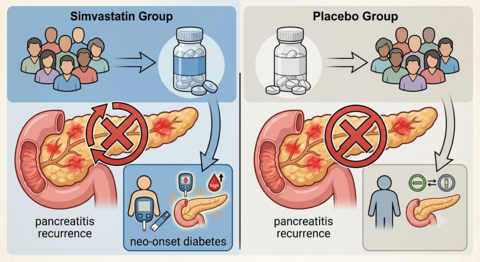
Results: A total of 85 patients (42.1% women) were included in the interim analysis. In the intention-to-treat analysis, no significant differences were observed regarding recurrence: 46.2% simvastatin versus 44.4% placebo; OR = 1.07, 95% CI: 0.43-2.66; p = 0.88, or time to recurrence. No statistically significant differences were observed in recurrence in per-protocol analysis (35.5% simvastatin vs. 41.9% placebo; OR = 0.76, 95% CI: 0.27-2.12; p = 0.60). Development of diabetes mellitus was more frequent in the simvastatin group (4 vs. 0 patients; OR not calculable, p = 0.04).
Conclusion: This trial, evaluating simvastatin versus placebo for the prevention of pancreatitis, did not demonstrate a reduction in recurrence rate, although results might be underpowered due to early termination. The relationship between statins in these patients and new-onset diabetes requires further investigation.