
Local postprocedural cryoprevention of post-ERCP pancreatitis (PEP)
Azuma S et al, Am J Gastroenterol. 2026;121(5):1224-1232
Irrigation of the papilla with ice water following an ERCP significantly reduced the incidence of PEP in a randomized trial in Japan, suggesting that cryoprevention may be a safe and cost-effective means of PEP prophylaxis.
Introduction: Postendoscopic retrograde cholangiopancreatography (ERCP) pancreatitis (PEP) is a common, potentially serious adverse event of ERCP. Although rectal nonsteroidal anti-inflammatory drugs are recommended for prevention, their use in Japan is limited due to dosage concerns. This multicenter randomized controlled trial evaluated the efficacy and safety of ice water irrigation to the papilla in reducing PEP.
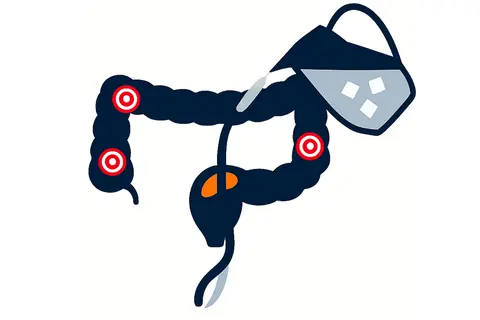
Methods: This single-blind trial enrolled 880 adults with a native papilla undergoing ERCP at 8 hospitals in Japan (March 2022-February 2024). After 3 withdrawals, 877 were analyzed (cryoprevention: 434; control: 443). The primary outcome was PEP incidence, defined as abdominal pain within 24 hours and serum amylase or lipase ≥ 3 times the upper normal limit. Secondary outcomes included cholangitis, bleeding, perforation, and mortality.
Results: PEP incidence was significantly lower in the cryoprevention group (3.2%; 95% CI: 1.7-5.4%) than the control group (6.8%; 95% CI: 4.6-9.6%) (p = 0.02), with absolute and relative risk reductions of 3.6% and 52.4%. No significant differences were observed in secondary outcomes, including cholangitis (0.9% vs. 1.1%; p = 1.00), bleeding (1.4% vs. 2.5%; p = 0.33), or perforation (0.9% vs. 0.2%; p = 0.21). One control patient died from severe PEP. No adverse events related to cryoprevention were reported.
Discussion: Cryoprevention using ice water significantly reduced PEP incidence, demonstrating a safe, effective, and low-cost strategy. This approach offers a practical alternative, where nonsteroidal anti-inflammatory drugs use is limited.