
Impact of clinical, demographic and dietary factors on the risk of IBD flares – The PREdiCCt Study
Constantine-Cooke N et al, Gut. 2026;75(8):1491-1504
In this largest prospective study to date, involving over 2600 IBD patients, increased consumption of meat was associated with an elevated risk of flares in ulcerative colitis. Interestingly, intake of ultra-processed foods, dietary fiber, and unsaturated fatty acids had no effect on the risk of flares during the folllow-up period of approximately 4 years.
Background: IBD is characterised by recurrent flares, but evidence on whether modifiable dietary factors influence flare risk is limited.
Objective: The PREdiCCt study was designed to examine demographic, clinical and dietary factors associated with disease flare among patients with IBD in self-reported remission.
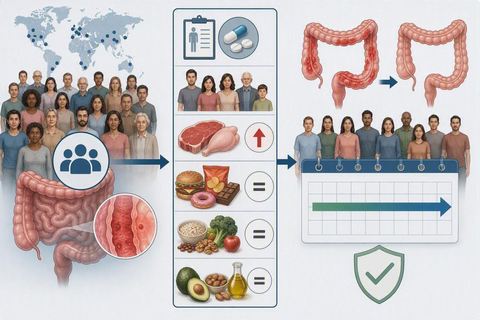
Design: Multicentre, prospective cohort study conducted across 47 UK centres. Patients with Crohn's disease (CD), ulcerative colitis (UC) or IBD unclassified (IBDU) in self-reported remission were prospectively followed up. The baseline diet was assessed using a validated food frequency questionnaire. The primary outcome was time to patient-reported flare (captured by monthly IBD-Control) and objective flare (clinical flare plus C-reactive protein >5 mg/L and/or faecal calprotectin (FC) > 250 µg/g with treatment escalation). Associations were evaluated using Cox frailty models adjusted for demographic, clinical and biochemical variables, including baseline FC.
Results: Between November 2016 and March 2020, 2629 participants (1370 CD; 1259 UC/IBDU) were enrolled and followed up for a median of 4.1 years (IQR, 3.0-5.0). Baseline FC was strongly associated with patient-reported flares (FC ≥ 250 µg/g: adjusted HR (aHR) = 2.22; FC 50-250 µg/g: aHR = 1.52 (reference < 50 µg/g)) and objective flares (FC ≥ 250 µg/g: aHR = 3.25; FC 50-250 µg/g: aHR = 1.98). In UC, higher total meat intake was associated with increased risk of objective flares (highest versus lowest quartile: aHR = 1.95, 95% CI: 1.07-3.56). No consistent associations were observed for ultraprocessed foods, fibre or polyunsaturated fatty acids and flare.
Conclusion: Higher habitual meat intake was associated with increased risk of objective flare in UC, suggesting diet may contribute to flare susceptibility in specific patient groups.