
Appendicectomy in active ulcerative colitis after failure of biologic therapy (COSTA trial)
Visser E et al, 2026;11(3):190-203
In this multicenter study enrolling patients with active ulcerative colitis and prior failure of biologics, appendicectomy was associated with higher clinical remission rates after one year compared with switching to a JAK inhibitor.
Background: Although retrospective and limited prospective observational studies have suggested a potential benefit of appendicectomy in therapy-refractory ulcerative colitis, its effectiveness compared with advanced medical therapy in active, biologic-exposed patients has not been evaluated prospectively. We evaluated the efficacy of laparoscopic appendicectomy in inducing remission, compared with JAK inhibitor therapy, in patients with active ulcerative colitis who had persistent disease activity despite previous advanced therapy exposure (a small molecule or a biologic).
Methods: In this multicentre, patient-preference, interventional cohort study, conducted in five hospitals in the Netherlands, patients with a total Mayo score (TMS) of 5–12 and an endoscopic subscore of 2 or higher despite treatment with an advanced therapy were offered one of three treatments: laparoscopic appendicectomy while continuing their existing advanced therapy at a stable dose; switching their advanced therapy to a JAK inhibitor; or colectomy. This analysis focuses on patients who chose appendicectomy or to switch their advanced therapy; patients who chose colectomy were included in a non-comparative registry cohort, and outcomes in this group were recorded but not included in the comparative analyses. The primary outcome was the proportion of patients in clinical remission (TMS ≤ 2, no subscore > 1) at 12 months without therapy failure (defined as start or restart of oral corticosteroids; switch to other advanced therapies; initiation of experimental treatment in a clinical trial; or colectomy), assessed in the modified intention-to-treat population (all patients who underwent appendicectomy or received at least one dose of the JAK inhibitor, excluding patients who had a change in disease diagnosis from ulcerative colitis to Crohn's disease). The primary endpoint was analysed by χ2 test, with an additional analysis using logistic regression adjusting for baseline confounding variables. Safety outcomes were assessed in all patients who underwent appendicectomy or received at least one dose of the JAK inhibitor.
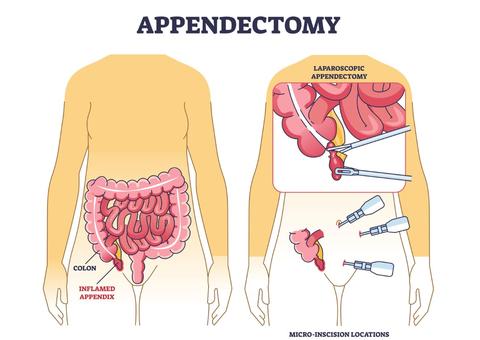
Findings: Between August 24, 2018, and December 15, 2023, 211 patients were screened for eligibility, of whom 125 (59%) patients were enrolled in the study; 116 patients were included in the modified intention-to-treat-analysis (67 received appendicectomy and 49 received JAK inhibitor). 22 (32.8%) of 67 patients in the appendicectomy group were in clinical remission without therapy failure at 12 months compared with six (12.2%) of 49 patients in the JAK inhibitor group (unadjusted difference of 20.6 percentage points [95% CI: 6.1–35.1]; p = 0.010; adjusted difference of 22.9 percentage points [95% CI: 6.1–39.8]; p = 0.016). At 12 months, corticosteroid-free clinical remission without therapy failure was attained in 22 (32.8%) of 67 patients in the appendicectomy group compared with six (12.2%) of 49 patients in the JAK inhibitor group (difference of 20.6 percentage points [95% CI: 6.1–35.1]; p = 0.010), clinical response in 49 (73.1%) of 67 patients compared with 26 (53.1%) of 49 patients (20.1 percentage points [2.5–37·6]; p = 0.025), and endoscopic response in 31 (48.4%) of 64 patients compared with 11 (25.6%) of 43 patients (25.6%; 22.9 percentage points [5.0–40.7]; p = 0.018). Time-to-symptomatic remission (hazard ratio 1.06 [95% CI: 0.62–1.82]; p = 0.82), therapy failure (39 [58.2%] of 67 patients vs. 28 [57.1%] of 49 patients; difference of 1.1 percentage points [95% CI: -17.1 to 19.3]; p = 0.91) and colectomy rates (six [9.0%] of 67 patients vs. four [8.2%] of 49 patients; difference of 0.8 percentage points [95% CI: -9.5 to 11.1]; p = 1.0) were similar between the appendicectomy and JAK inhibitor groups. Adverse events were reported in 39 (56.5%) of 69 patients in the appendicectomy group and 30 (60.0%) of 50 patients in the JAK inhibitor group (difference of 3.5 percentage points [95% CI: -21.4 to 14.4]; p = 0.70]). Appendicectomy-related complications occurred in three (4.3%) of 69 patients and were all Clavien-Dindo grade II or lower.
Interpretation: Appendicectomy as an adjunct to advanced therapy in biologic-exposed patients with active ulcerative colitis was associated with higher clinical remission rates at 12 months compared with switching to a JAK inhibitor, suggesting potential effectiveness, and the procedure can be performed safely in this patient group.